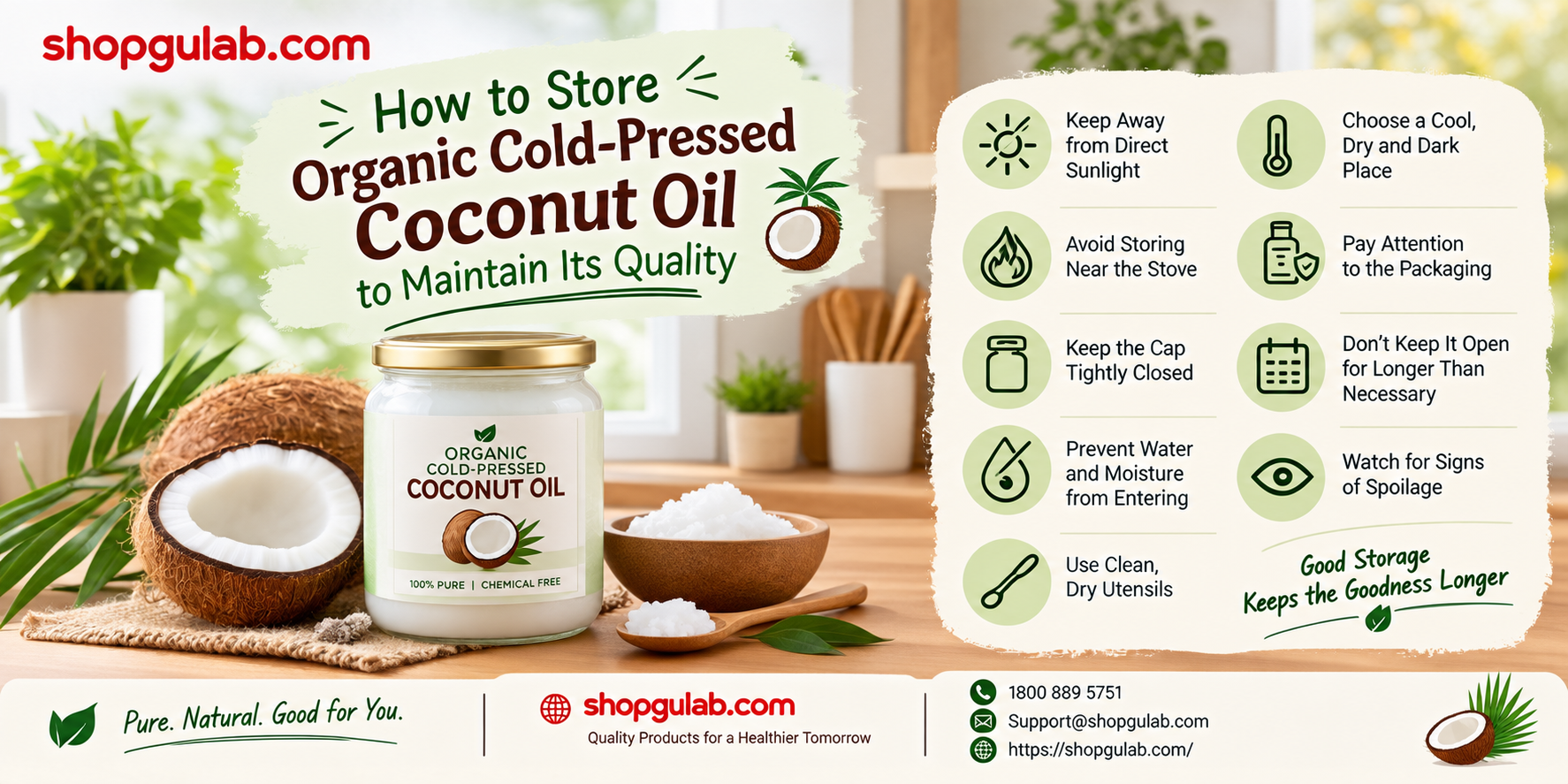
 You buy a good bottle of coconut oil, open it, use a few spoonfuls, and then leave it in the kitchen cabinet. A few weeks later, you notice that its aroma or texture seems different. Was the oil originally poor quality, or was it simply stored incorrectly?
This is a common issue with cooking oils. Choosing the best organic cold-pressed coconut oil ↗ is only one part of maintaining quality. How you handle and store the bottle after opening also matters.
Coconut oil is relatively stable compared with many other edible oils, but that does not mean it is completely unaffected by its surroundings. Heat, light, oxygen, moisture, and poor handling can gradually affect oil quality. Food-science literature identifies these factors as important contributors to oxidation and deterioration in edible oils.
The good news is that proper storage is simple. You do not need special equipment or complicated preservation methods—just a few sensible kitchen habits.
1. Keep Coconut Oil Away From Direct Sunlight
One of the easiest mistakes to make is leaving a bottle of coconut oil on an open kitchen shelf where sunlight reaches it.
Light can accelerate oxidation in edible oils, particularly when the oil is exposed for long periods. Research on cold-pressed oils recommends limiting exposure to light and storing them in cool, dry areas.
A closed kitchen cabinet or pantry is generally a better location than a sunny countertop.
If your bottle comes in opaque or dark packaging, that can also help limit light exposure. FAO guidance on oil storage similarly recommends containers that exclude light and heat.
2. Don't Store It Next to the Stove
This is probably one of the most practical storage tips for an Indian kitchen.
The area beside your gas stove may be convenient, but it is exposed to repeated bursts of heat every time you cook. Even when the bottle does not feel extremely hot, frequent temperature changes are unnecessary stress for the oil.
Heat can accelerate oxidation and other quality changes in edible oils.
Instead, choose a cabinet away from your stove, oven, microwave, or other regular heat sources.
Think of it this way: the easiest place to reach is not always the best place to store it.
3. Keep the Cap Tightly Closed
Every time you leave the bottle open, the oil comes into contact with air.
Oxygen is one of the factors involved in lipid oxidation, which can eventually lead to stale or rancid flavours and aromas.
So after pouring or scooping out the amount you need, close the bottle properly.
It sounds insignificant, but making this a habit can help reduce unnecessary exposure to air.
Open → use → close.
That simple routine is better than leaving the cap loose while preparing a meal.
4. Keep Water and Moisture Out of the Bottle
Never introduce water into your coconut oil container.
For example, if you use a spoon to scoop semi-solid coconut oil, make sure the spoon is clean and completely dry. Do not use a wet spoon that has just been washed.
Moisture can contribute to deterioration in fats and oils, and clean, dry storage containers are specifically recommended for maintaining oil quality.
This becomes particularly important if you buy a larger bottle that will remain open for several months.
5. Don't Panic When Coconut Oil Turns Solid
Here is something that confuses many first-time users.
Coconut oil can naturally change between a liquid and a solid or semi-solid state depending on temperature. Seeing your coconut oil become cloudy, creamy, or solid does not automatically mean that it has spoiled.
Coconut oil has a relatively high proportion of saturated fatty acids, which contributes to its tendency to solidify as temperatures fall.
So if your coconut oil is liquid during a warm afternoon and becomes solid during cooler conditions, that is not by itself a quality problem.
The important thing is to look for other signs of deterioration, particularly an unusual rancid or unpleasant smell.
6. Choose the Right Place for Your Kitchen Climate
Storage conditions can be particularly noticeable in places where kitchen temperatures fluctuate considerably.
If your kitchen becomes very hot during the afternoon, avoid leaving your coconut oil near windows, cooking areas, or appliances that generate heat.
A relatively cool, dry, and dark cabinet is usually a practical choice.
You do not necessarily need to refrigerate coconut oil simply because you want to preserve it. For many households, normal room-temperature pantry storage away from heat and sunlight is more convenient.
If you choose refrigeration, remember that the oil will become harder and may be less convenient to scoop or pour.
7. Use Clean, Dry Utensils
This small habit is easy to overlook.
If your coconut oil is stored in a jar, use a clean and dry spoon whenever you take some out. Avoid putting food-covered utensils directly into the container.
The same principle applies if you transfer coconut oil into another container. The container should be thoroughly cleaned and completely dry before use.
FAO guidance specifically notes that reused oil containers should be properly cleaned and dried because traces of old rancid oil or water can affect the new oil.
8. Pay Attention to the Packaging
Packaging is not just about appearance.
A good container should protect the oil from unnecessary exposure to light, air, moisture, and contaminants. Research on cold-pressed oils indicates that airtight, light-protective packaging can help reduce oxidation.
When buying the best organic cold-pressed coconut oil, therefore, look beyond the words on the front label. Check whether the bottle is properly sealed and whether the packaging appears clean and undamaged.
If the seal is broken, the cap is damaged, or the bottle is leaking, it is better to address the issue before using the product.
9. Don't Keep the Bottle Open for Longer Than Necessary
Buying a large bottle can be economical, but it only makes sense if you can use it within a reasonable period while maintaining proper storage.
Once opened, the oil is repeatedly exposed to air every time the bottle is used.
This does not mean you need to throw away coconut oil after a fixed number of weeks. Instead, follow the manufacturer's best-before information and pay attention to changes in aroma, appearance, and taste.
Food-safety guidance distinguishes shelf life as a quality issue for many shelf-stable foods, with rancidity being one example of quality deterioration.
10. Know the Signs That Your Coconut Oil Has Lost Quality
Proper storage can help maintain quality, but it cannot make an oil last indefinitely.
Before using an older bottle, take a moment to check it.
Look for:
-
An unusual or unpleasant smell
-
A stale or rancid aroma
-
Unexpected changes in appearance
-
A noticeably unpleasant taste
-
Damaged or compromised packaging
-
Oil that has been repeatedly exposed to heat, sunlight, or moisture
Rancidity is commonly associated with unpleasant changes in aroma and flavour as oxidation progresses.
If the oil clearly smells or tastes off, it is better not to use it simply because the bottle has not reached its printed best-before date.
Should You Refrigerate Organic Cold-Pressed Coconut Oil?
Usually, refrigeration is not necessary for everyday storage.
Coconut oil is comparatively resistant to oxidation, and research describes it as slower to oxidize than many other vegetable oils.
For most kitchens, storing it in a cool, dry, dark place with the container tightly closed is a practical approach.
Refrigeration can make the oil quite firm, which may be inconvenient if you use it frequently.
If you live in a particularly hot environment or your product's manufacturer recommends refrigeration after opening, follow the product-specific instructions on the label.
A Simple Storage Routine to Follow
You don't need to overthink coconut oil storage.
Just remember these six habits:
Keep it cool → keep it dark → keep it dry → keep the cap tight → use clean utensils → check freshness.
These simple steps reduce unnecessary exposure to the main factors associated with oil deterioration.
And remember, buying the best organic cold-pressed coconut oil does not mean you can ignore storage. Product quality and storage practices work together.
What About Buying Coconut Oil in a Large Bottle?
A larger pack can make sense for households that use coconut oil regularly. But if you only use a small amount occasionally, a smaller bottle may be easier to manage.
The reason is simple: every opened bottle experiences repeated exposure to air over its period of use.
So instead of automatically choosing the biggest available pack, think about your actual consumption.
Regular user? A larger pack may be practical.
Occasional user? A smaller pack may help you finish the oil sooner while it is still fresh.
Final Thoughts
Good coconut oil deserves good storage.
Whether you use it for cooking, baking, or other everyday kitchen purposes, keep the bottle away from direct sunlight and excessive heat, close it tightly after every use, and always use clean, dry utensils.
Most importantly, don't mistake normal changes in coconut oil's texture for spoilage. Solidification can occur naturally as temperatures change. Instead, pay attention to the overall condition of the oil, especially its aroma and taste.
When choosing the best organic cold-pressed coconut oil, consider both the product and what happens after you bring it home. A sensible storage routine can help preserve its characteristic quality for longer.
For reliable coconut oil options and everyday kitchen essentials, Shop Gulab ↗ offers products designed with quality and convenience in mind.
Contact Us ↗: If you have questions about organic cold-pressed coconut oil, product selection, or suitable pack sizes, feel free to contact us for more information and assistance.