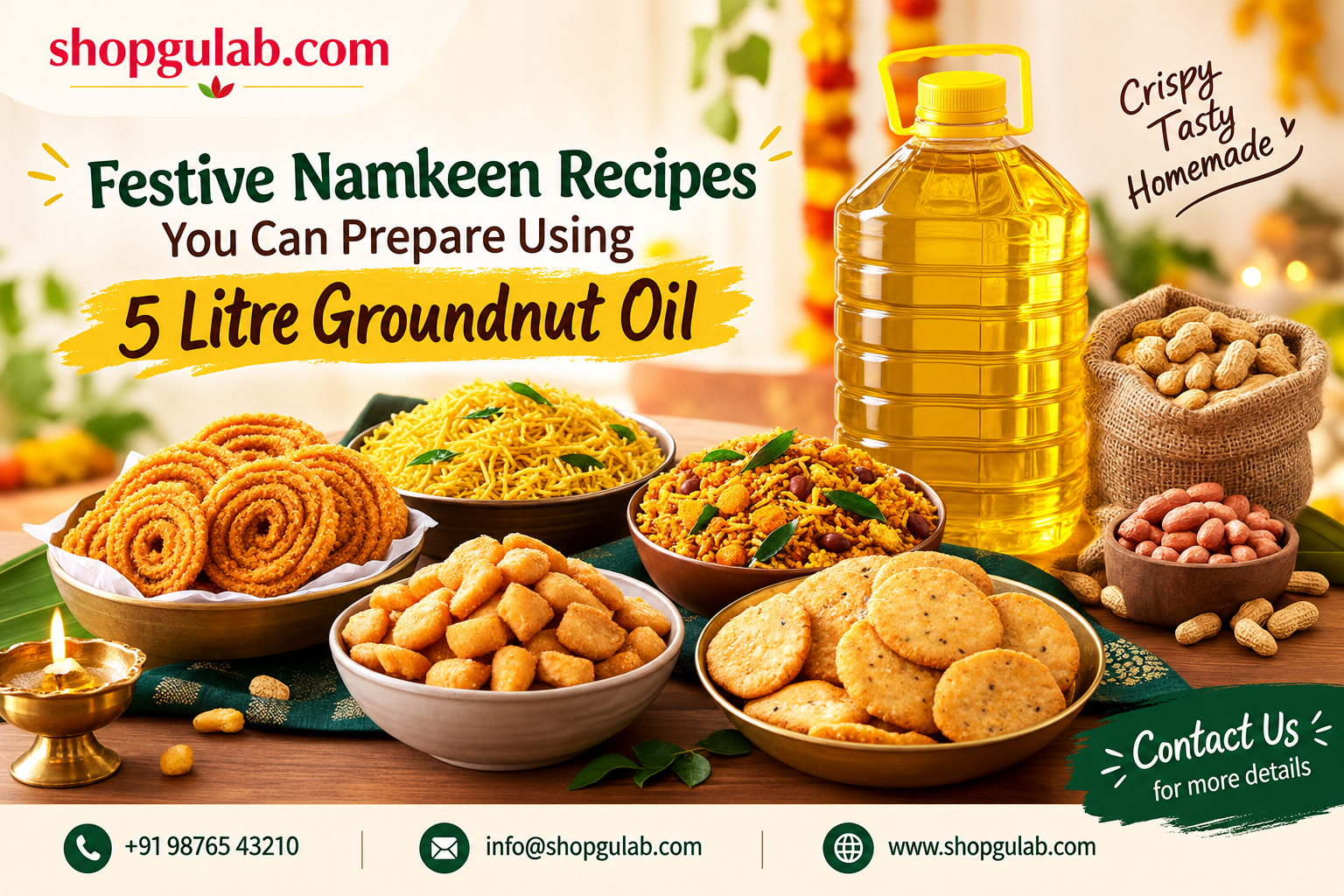
 Festivals in India are incomplete without a plate of crunchy, homemade namkeen. From chakli and sev to shankarpali and crispy mathri, festive snacks bring families together and make tea-time more enjoyable. When preparing several batches for guests or family gatherings, choosing the right cooking oil can make the frying process easier. 5 litre groundnut oil ↗ is a practical option for households preparing larger quantities of traditional snacks because it provides enough oil for multiple frying sessions.
Whether you are preparing namkeen for Diwali, Navratri, Holi, or a family celebration, having groundnut oil 5 ltr at home can be convenient when several recipes are on the menu.
Why Groundnut Oil Works Well for Festive Namkeen
Traditional Indian namkeen usually needs frying at a consistent temperature. Groundnut oil is commonly used in Indian kitchens for frying because of its neutral-to-mild flavour and suitability for a variety of recipes.
When cooking for a gathering, a larger pack such as 5 litres of groundnut oil can also be convenient. Instead of repeatedly purchasing small bottles, you have enough oil available for preparing different snacks.
However, the quantity of oil you actually need depends on your pan size, batch size, and cooking method. The goal is not to use all five litres at once but to have an adequate quantity available for safe and convenient frying.
1. Crispy Homemade Chakli
Chakli is one of the most popular festive namkeen recipes. Prepare a dough using rice flour, gram flour, spices, sesame seeds, and a little fat. Shape the dough into spirals and fry until crisp.
For a large festive batch, 5 litres of groundnut oil can be useful because chaklis are generally fried in batches rather than all at once.
Tip: Keep the oil at a moderate temperature. If it is too hot, the outside may brown quickly while the inside remains undercooked.
2. Masala Sev
Sev is another classic snack that works beautifully on a festive namkeen platter. Mix gram flour with spices and a little water to create a firm batter. Pass it through a sev maker directly into moderately hot oil.
You can prepare plain sev, pepper sev, garlic sev, or a spicier version depending on your family's preference.
Tip: Fry smaller portions at a time so the oil temperature does not drop suddenly.
3. Gujarati Gathiya
Soft or crispy gathiya is a favourite tea-time snack in many Gujarati households. A simple gram flour dough seasoned with ajwain, turmeric, salt, and other spices can be shaped and fried.
A larger quantity of cooking oil is particularly convenient when preparing gathiya for guests because several batches may be required.
Tip: Avoid overcrowding the frying pan. Give each batch enough space to cook evenly.
4. Homemade Mathri
Mathri adds a satisfying crunch to a festive snack box. Make a firm dough using refined flour, spices, salt, and a suitable fat. Roll it out, cut small discs, prick them with a fork, and fry until golden and crisp.
Using groundnut oil 5 ltr for a larger cooking session gives you flexibility when preparing several batches.
Tip: Fry mathris over medium-low heat. Slow frying helps them become crisp rather than simply turning brown on the outside.
5. Crispy Shankarpali
Shankarpali can be prepared in both sweet and savoury versions. For a savoury namkeen variation, combine flour, spices, salt, and other ingredients to make a firm dough. Cut small diamond-shaped pieces and fry them until crisp.
Because shankarpali is normally prepared in a sizeable batch during festivals, keeping 5 litres of groundnut oil available can make the preparation more convenient.
6. Spicy Mixture Namkeen
A homemade mixture allows you to combine different textures in one snack. You can use fried sev, boondi, peanuts, roasted ingredients, curry leaves, and spices.
Prepare each fried component separately and combine everything after cooling. This gives you better control over the texture and seasoning.
Tip: Add the spices after the fried ingredients have cooled slightly so the seasoning sticks without becoming bitter from excessive heat.
7. Peanut Namkeen
Peanuts are a simple but delicious addition to a festive snack platter. Lightly season raw peanuts with spices and fry them until crunchy.
They can also be combined with sev and other ingredients to create a quick homemade mixture.
Tip: Keep the frying temperature controlled because peanuts can darken quickly.
8. Boondi Namkeen
Boondi is made by passing a gram flour batter through a perforated ladle into hot oil. Once fried, the tiny pieces can be seasoned or mixed with other namkeen ingredients.
This recipe requires some practice because the batter consistency affects the shape and texture of the boondi.
Tip: Test a small amount of batter first. Adjust its consistency before making the complete batch.
How Much Oil Do You Need for Festive Namkeen?
Buying 5 litres of groundnut oil does not mean you need to use five litres for one recipe. The actual amount depends on the size and depth of your cooking vessel and the quantity of namkeen being prepared.
For deep frying, the oil should be deep enough for the food to cook without sticking to the bottom. Work in manageable batches and allow the oil to return to the appropriate temperature between batches.
If you are preparing several varieties such as chakli, sev, mathri, gathiya, and shankarpali, a larger oil pack can be convenient for managing the overall cooking session.
Smart Tips for Better Festive Frying
A few simple practices can make homemade namkeen noticeably better:
-
Keep the oil temperature consistent.
-
Do not overcrowd the pan.
-
Remove fried snacks when they reach the desired colour.
-
Drain excess oil properly after frying.
-
Allow namkeen to cool completely before storing.
-
Use clean, dry storage containers.
-
Avoid adding moisture to finished snacks.
-
Prepare smaller batches if you want maximum freshness.
Most importantly, don't judge doneness only by colour. Texture, cooking time, and the behaviour of the food in the oil also matter.
Food Safety Matters
Good frying starts with good kitchen practices. Always use a stable, suitable cooking vessel and avoid leaving hot oil unattended. Keep water away from hot oil because accidental contact can cause dangerous splattering.
It is also important to avoid repeatedly using oil that has developed an unusual smell, excessive darkening, foaming, or other noticeable changes. When in doubt, discard it rather than compromising food quality.
For general food-safety guidance, you can refer to the Food Safety and Standards Authority of India (FSSAI) ↗ for reliable information on safe food practices.
Make Your Festive Namkeen More Special
Homemade namkeen has something packaged snacks cannot always offer: the ability to adjust the recipe to your family's taste. You can make the chakli spicier, add more sesame seeds to your mixture, reduce the salt, or prepare a mild version for children.
For households preparing multiple festive recipes, 5 litre groundnut oil can be a convenient kitchen-size option, particularly when deep-frying is part of the celebration menu. The key is to focus on controlled frying, proper storage, and using fresh ingredients.
If you are looking for quality cooking oil for your festive preparations, Shop Gulab ↗ offers options worth exploring for everyday Indian cooking.
Contact Us ↗: Have questions about choosing the right cooking oil for your festive recipes? Contact us for more information.