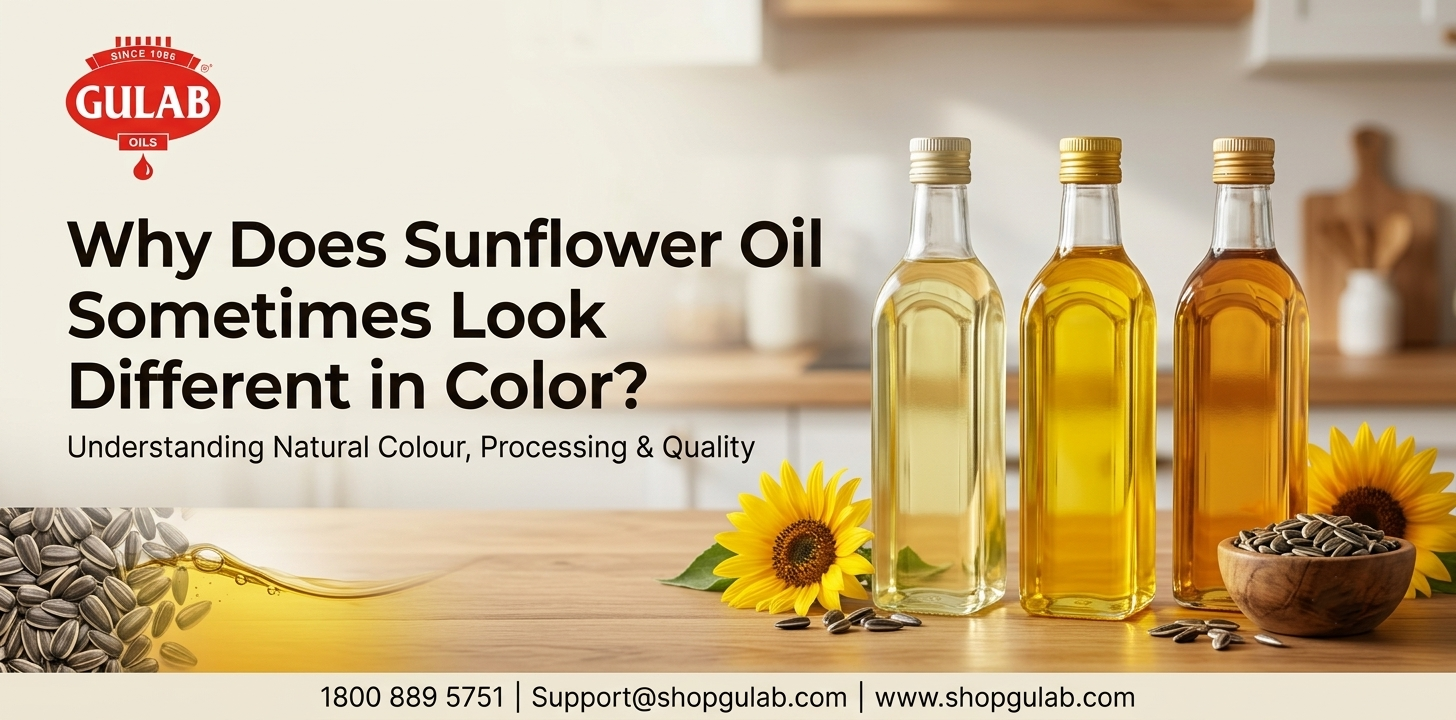
 If you have ever compared two bottles of Sunflower Oil ↗ side by side, you may have noticed that one looks pale yellow while another appears deeper golden or slightly amber. It is natural to wonder whether the darker oil is purer, whether the lighter one has been overly processed, or whether a change in colour means the oil is no longer fresh.
The good news is that colour alone does not tell the complete story. The appearance of sunflower oil can be influenced by the sunflower seeds, extraction method, refining, filtration, storage conditions, and even the way light interacts with the bottle.
Understanding these factors makes it much easier to judge oil based on meaningful quality indicators rather than appearance alone.
What Gives Sunflower Oil Its Colour?
Sunflower seeds naturally contain pigments and other minor compounds that can influence the colour of the extracted oil. Carotenoids, for example, are among the natural pigments found in sunflower oil.
Research on sunflower oil has identified natural pigments including lutein, beta-carotene, and zeaxanthin in crude oil. Their concentrations can change considerably during refining.
This means that two oils made from sunflower seeds do not necessarily start with the same appearance.
The important point is that golden, pale yellow, or slightly darker colour does not automatically mean better or worse quality.
1. The Variety and Condition of Sunflower Seeds Matter
The journey of the oil begins with the seed.
Sunflower varieties can differ in their natural composition, and factors such as growing conditions, maturity, handling, and storage can influence the characteristics of the raw material. As a result, crude oil extracted from different batches of sunflower seeds may naturally vary in colour.
This is similar to how the colour of vegetables or grains can vary slightly from one harvest to another. Natural agricultural products are not always perfectly identical.
For consumers, this is why judging Sunflower Oil only by colour can be misleading.
2. Refining Can Make the Oil Look Lighter
Processing is one of the biggest reasons oils can look different.
Refining can include steps such as degumming, neutralisation, bleaching or decolourisation, dewaxing, and deodorisation. These processes are designed to remove specific unwanted substances and improve characteristics such as appearance, flavour, stability, and usability.
During bleaching, adsorbent materials are used to remove pigments such as carotenoids and chlorophyll, among other compounds.
A study examining sunflower oil before and after refining also observed a reduction in measured colour absorbance after refining.
So, if one bottle of oil looks very light and another has a richer golden colour, differences in processing may be part of the explanation.
3. Cold-Pressed and Refined Oils May Look Different
Processing method matters particularly when comparing cold-pressed and refined oils.
A less-refined oil may retain more of the naturally occurring pigments and compounds from the sunflower seed. A refined oil generally undergoes additional processing that reduces many of these colour-producing components.
That is why a cold-pressed oil may appear more golden or have a more pronounced natural appearance, while a highly refined oil may look lighter and clearer.
Neither appearance should be used by itself as proof of purity or quality.
4. Filtration Can Also Affect Appearance
Filtration removes suspended particles and other material from oil. Depending on the production and filtration process, this can influence how clear the finished product appears.
A well-filtered oil may look bright and clear, while a less-filtered product can have a somewhat different visual appearance.
Again, clarity and colour are separate characteristics. A consumer should not assume that the clearest bottle automatically contains the highest-quality oil.
5. Temperature Can Change How the Oil Looks
Storage temperature can also affect the appearance of edible oils.
When oil is exposed to cooler conditions, some components can become less soluble or form crystals, making the oil appear cloudy. FAO material on edible fats and oils describes winterization as a controlled cooling process used to crystallise and remove waxes that could otherwise cause clouding.
This means that a temporary change in appearance does not necessarily indicate that the oil has spoiled.
If the oil becomes cloudy after being kept in a cooler environment but returns to its usual appearance after reaching normal room temperature, temperature may be the reason.
6. Light and Storage Conditions Matter
Where you store your cooking oil matters more than many people realise.
Repeated exposure to strong light and excessive heat can affect edible oils over time. For everyday household storage, it is sensible to keep the bottle tightly closed and away from direct sunlight and unnecessary heat.
A kitchen shelf directly beside a stove may look convenient, but it can expose the bottle to repeated heat every time you cook.
A cooler, dry, dark storage location is generally more suitable.
Does Darker Sunflower Oil Mean It Is More Pure?
No.
This is one of the most common assumptions worth clearing up.
A darker colour can result from naturally occurring pigments or differences in processing. A lighter colour can result from refining and pigment removal. Neither colour, by itself, proves that the oil is pure, adulterated, fresher, or nutritionally superior.
The American Oil Chemists' Society, for example, treats colour as one of several analytical characteristics used when evaluating crude sunflower oil; it is not a standalone measure of overall product quality.
For consumers looking for pure sunflower oil, it is more useful to check the product label, ingredient information, manufacturer details, packaging integrity, manufacturing or best-before information, and storage conditions.
When Should a Change in Colour Get Your Attention?
A small difference in colour between batches is not automatically concerning. However, a sudden and unusual change accompanied by an unpleasant smell, strange taste, damaged packaging, leakage, or other obvious signs of deterioration deserves attention.
Do not rely on colour alone to decide whether an oil is suitable for consumption.
For example, an oil that looks slightly darker than another bottle may simply come from a different batch or have undergone a different degree of processing. On the other hand, an unusual odour combined with poor storage history is a more meaningful reason to investigate the product.
How to Judge Sunflower Oil More Carefully
Instead of holding the bottle against the light and judging it by colour alone, use a broader checklist:
Check the label: Look at the product description and ingredient information.
Check the date: Pay attention to manufacturing and best-before information.
Inspect the packaging: The seal should be intact, with no leakage or obvious damage.
Consider storage: Avoid bottles that have clearly been exposed to excessive heat or direct sunlight.
Notice the smell: An unusual or unpleasant odour can provide more useful information than colour alone.
Buy from a reliable source: Product traceability and proper handling are important parts of food quality.
These small habits make you a more informed buyer and help prevent common misconceptions about edible oils.
The Bottom Line
So, why does Sunflower Oil sometimes look different in colour?
The answer can involve several factors, including the variety and condition of sunflower seeds, natural pigments, extraction method, refining, filtration, temperature, and storage.
A pale yellow oil and a deeper golden oil can both be perfectly normal depending on how they were produced and handled. Colour is one visual characteristic—not a complete quality test.
When choosing cooking oil, look beyond appearance and consider the product's processing information, label, freshness, packaging, storage, and source. This approach gives you a much more reliable picture of what you are buying.
For consumers looking for dependable edible oil products, Gulab Oils ↗ provides product information that can help you choose according to your household cooking requirements.
Contact us ↗ to learn more about our edible oil range, product details, and available options.