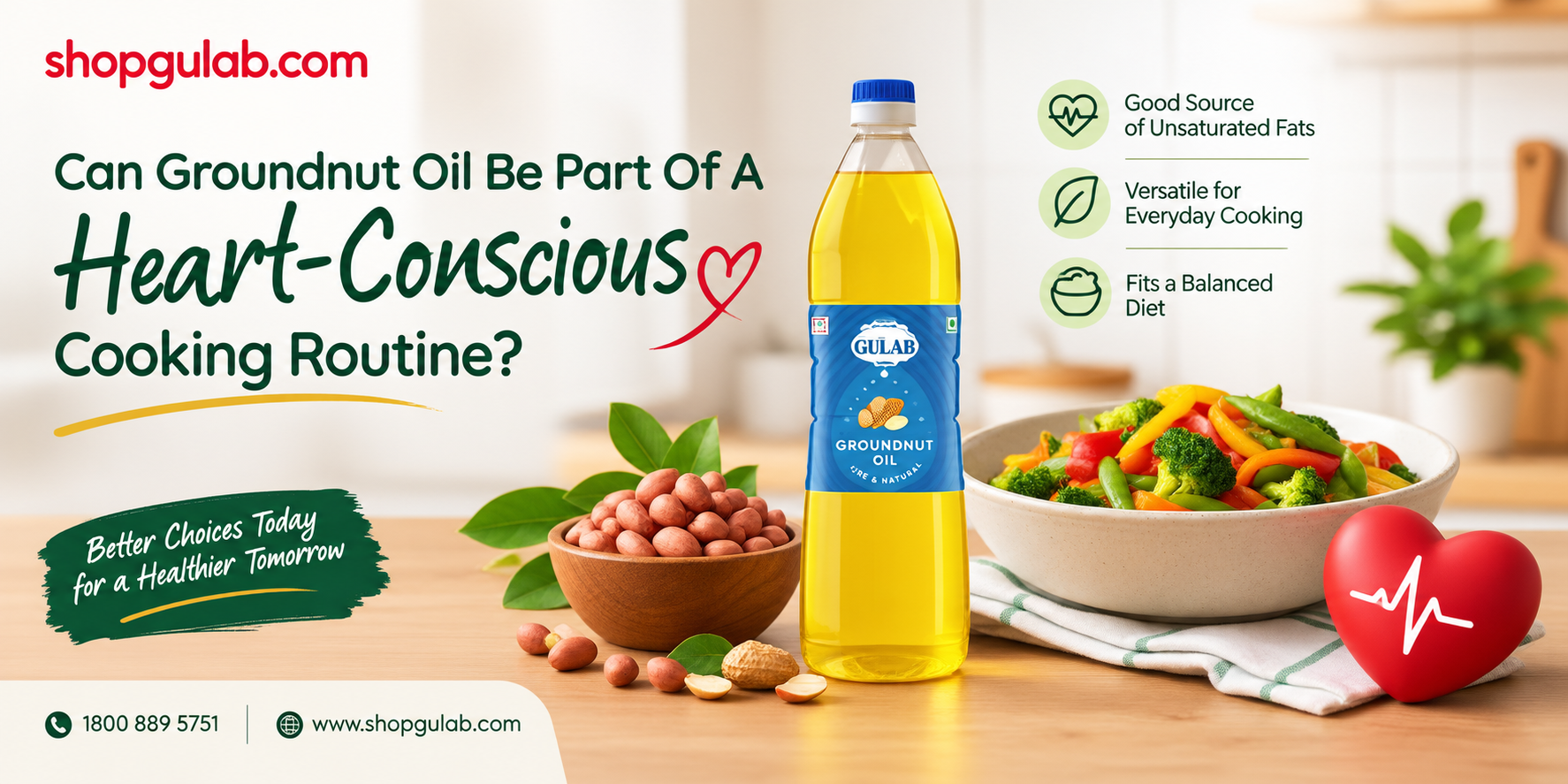
 When people start paying closer attention to heart health, cooking oil is often one of the first kitchen staples they reconsider. But the answer is not simply about finding an oil that sounds “healthy.” What matters is the type of fat it provides, how much you use, what it replaces, and how you cook with it.
So, can Groundnut Oil ↗ be part of a heart-conscious cooking routine? Yes, it can fit into an overall heart-conscious eating pattern when used thoughtfully. Groundnut Oil, also known as peanut oil, is a plant-based oil that contains predominantly unsaturated fats. The American Heart Association lists peanut oil among cooking oils that provide more unsaturated fats and less saturated fat than solid fats and some tropical oils.
What Makes Groundnut Oil Relevant to Heart-Conscious Cooking?
The conversation around cooking oil becomes clearer when we look beyond the word “oil” and consider its fat composition.
Groundnut Oil contains both monounsaturated and polyunsaturated fats. These are the types of unsaturated fats that are generally preferred over saturated and trans fats in a heart-conscious dietary pattern. The American Heart Association's current dietary guidance emphasizes replacing sources of saturated fat with unsaturated fats rather than simply trying to eliminate all dietary fat.
This distinction is important in an Indian kitchen. Replacing butter, ghee, or other sources of higher saturated fat with an appropriate liquid plant oil can be one practical change within a broader eating pattern.
However, Groundnut Oil should not be treated as a magic ingredient for heart health. The overall diet still matters more than any single cooking oil.
The Fat Profile Matters More Than Marketing Claims
One common mistake is to judge an oil only by phrases such as “natural,” “traditional,” or “premium.” A more useful approach is to examine the nutritional information and consider how the oil fits into your daily diet.
The American Heart Association recommends limiting saturated fat and avoiding trans fats, while replacing them with unsaturated fats where appropriate. It also recommends choosing liquid, non-tropical plant oils as part of an overall heart-healthy dietary pattern.
That makes Groundnut Oil relevant for people who want a versatile plant oil while paying attention to the quality of fats in their meals.
If you want reliable general guidance on dietary fats, the American Heart Association's guide to fats in foods ↗ is a useful non-commercial reference.
Where Groundnut Oil Fits Into an Indian Kitchen
Think about an ordinary day of cooking: vegetables being sautéed for lunch, dal getting a tadka, a batch of poha for breakfast, or homemade snacks being prepared for the family.
Groundnut Oil can work across several of these preparations because of its neutral-to-mild nutty character and versatility. That practical flexibility is one reason it has remained familiar in many Indian kitchens.
For a heart-conscious routine, however, the cooking method deserves as much attention as the oil itself.
Using a measured amount for sautéing or tempering is different from regularly consuming large quantities of deep-fried food. The American Heart Association specifically notes that deep-fat frying is not recommended as a healthy cooking method, even when using oils considered healthier.
In other words, choosing Groundnut Oil is only one part of the equation.
Portion Size Still Counts
A healthier fat is still a source of calories. This is an easy detail to overlook when switching from one cooking oil to another.
Instead of pouring oil directly from the bottle, try using a spoon or measuring tool when preparing everyday meals. This makes it easier to understand how much oil your household actually uses.
For example, a vegetable stir-fry does not necessarily need a generous layer of oil to cook well. Using enough to sauté the ingredients properly can help keep the meal balanced without sacrificing flavour.
The goal is not to make food completely fat-free. It is to use fats deliberately and build meals around vegetables, whole grains, legumes, nuts, seeds, and appropriate protein sources.
Groundnut Oil Is Not a Substitute for an Overall Heart-Healthy Diet
This is where many online discussions about cooking oils become misleading.
Adding Groundnut Oil to an otherwise highly processed diet does not automatically make that diet heart-conscious. Current American Heart Association guidance emphasizes an overall dietary pattern that includes vegetables and fruits, whole grains, healthy protein sources, unsaturated fats, minimally processed foods, and lower sodium intake.
So, rather than asking, “Is Groundnut Oil good for the heart?” a more useful question is:
“How does Groundnut Oil fit into the way I eat overall?”
That shift leads to more practical decisions.
Smart Ways to Use Groundnut Oil
If you enjoy Groundnut Oil, a few simple habits can make its use more mindful:
-
Use a measured quantity instead of adding oil by eye.
-
Use it for everyday sautéing, tempering, roasting, or other suitable cooking methods.
-
Avoid allowing the oil to smoke during cooking.
-
Do not repeatedly reuse cooking oil.
-
Store the bottle in a cool, dark place away from direct heat and sunlight.
-
Check the nutrition and ingredient information when buying packaged oil.
-
Balance oil-based dishes with vegetables, pulses, whole grains, and other nutrient-dense foods.
The American Heart Association advises against reusing or reheating cooking oil and recommends storing cooking oils in a cool, dark place.
These details may sound small, but they are the kind of everyday habits that make a cooking routine more consistent.
What About Cholesterol?
This is another area where it is worth avoiding oversimplification.
Unsaturated fats can be useful when they replace saturated fats in the diet. According to the American Heart Association, replacing saturated fats with unsaturated fats can help improve LDL (“bad”) cholesterol levels and reduce cardiovascular risk.
That does not mean Groundnut Oil should be viewed as a treatment for high cholesterol or heart disease. People who have been advised to follow a specific diet by a doctor or registered dietitian should continue following that individualized advice.
For most people, the more meaningful approach is to consider the complete dietary pattern rather than focusing on one ingredient in isolation.
Choosing Groundnut Oil With a More Informed Approach
When buying Groundnut Oil, don't judge quality solely from its colour or price.
Look at the product label, check the type of oil and processing information provided, and consider whether the product suits the way you cook. If you use oil infrequently, buying an appropriately sized bottle can also help you finish it while it is still fresh.
For households that cook frequently with Indian-style recipes, the best choice is often the oil that fits their cooking habits, nutritional goals, storage conditions, and budget—not simply the one with the most impressive marketing claim.
Final Thoughts
Groundnut Oil can be part of a heart-conscious cooking routine, particularly when it is used in place of fats higher in saturated fat and incorporated into an overall balanced eating pattern. Its unsaturated fat content makes it a practical option, but portion size, cooking method, food choices, and overall dietary quality remain important.
A heart-conscious kitchen does not have to mean abandoning familiar Indian flavours. It can simply mean making more informed choices about the ingredients already used every day.
For quality-focused cooking oil options and product information, you can explore Gulab Oils ↗.
For questions about products or usage, contact us ↗ through the company's customer support channels.