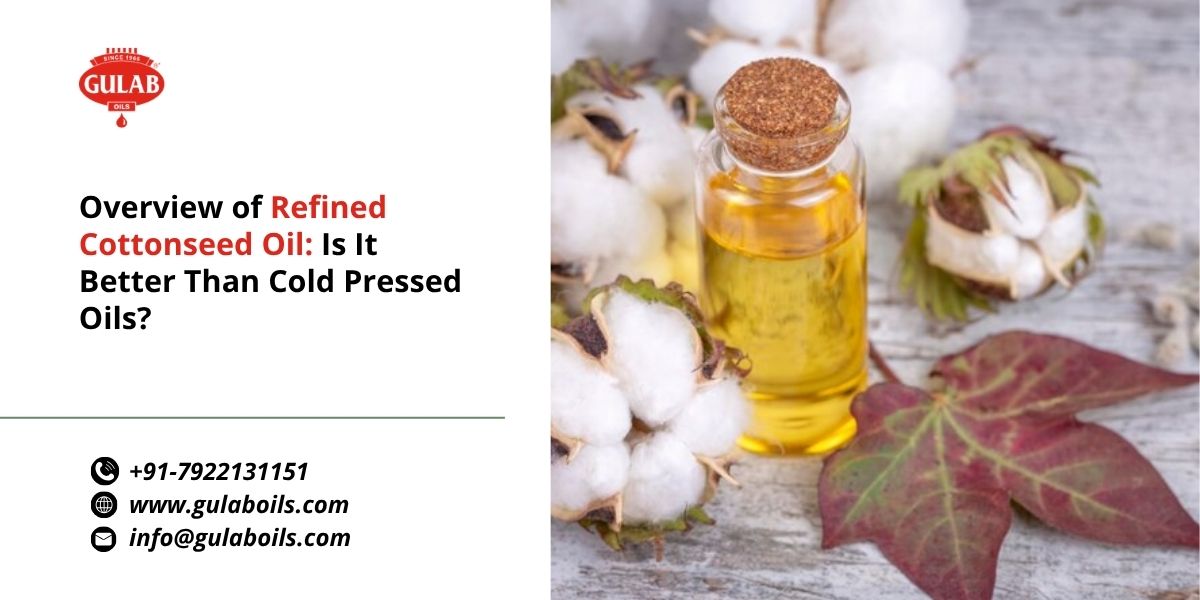
 Cooking oil is a daily essential in every kitchen, and the type you choose can influence both taste and health. Among the many options available today, cottonseed oil has gained steady attention, especially in India. Often known locally as kapasia oil, it is widely used for frying, sautéing, and large-scale cooking due to its stability and neutral flavor. But how does refined cottonseed oil compare to cold pressed oils? Let’s explore this in detail to help you make a more informed choice.
Understanding Refined Cottonseed Oil
Refined cottonseed oil ↗ is derived from the seeds of cotton plants and undergoes a purification process to remove impurities, natural toxins, and strong odors. This refining process ensures a clean, light-colored oil with a high smoke point, making it suitable for high-temperature cooking.
In India, cottonseed oil is commonly used in both households and commercial kitchens. Its versatility, affordability, and longer shelf life make it a practical choice for everyday cooking. Kapasia oil, as it is often referred to in regional markets, has become a trusted option for preparing a wide variety of dishes.
Nutritional Profile and Benefits
Refined cottonseed oil offers a balanced composition of fats, which plays an important role in overall health when consumed in moderation. It contains a mix of polyunsaturated and monounsaturated fats, along with small amounts of saturated fats.
Key benefits include:
-
Supports heart health when used as part of a balanced diet
-
Contains vitamin E, which acts as an antioxidant
-
Neutral taste that does not overpower food flavors
-
High smoke point, ideal for deep frying and high-heat cooking
Because of its stability, refined cottonseed oil does not break down easily under heat, which helps maintain the quality of food during cooking.
What Are Cold Pressed Oils?
Cold pressed oils are extracted without the use of heat or chemicals. This traditional method helps retain natural nutrients, aroma, and flavor. Oils like cold pressed groundnut, mustard, and coconut oil are popular for their purity and minimal processing.
These oils are often considered a more natural option, as they preserve bioactive compounds and essential nutrients. However, they also come with certain limitations in terms of cooking applications and shelf life.
Key Differences Between Refined Cottonseed Oil and Cold Pressed Oils
To better understand whether refined cottonseed oil is a better choice, it’s important to compare both options across different factors.
Processing Method
-
Refined cottonseed oil undergoes filtration and purification to ensure consistency and safety
-
Cold pressed oils are minimally processed, retaining natural characteristics
Cooking Performance
-
Refined cottonseed oil has a higher smoke point, making it ideal for frying and commercial cooking
-
Cold pressed oils are better suited for low to medium heat cooking
Flavor and Aroma
-
Refined cottonseed oil has a neutral taste, allowing the natural flavor of dishes to stand out
-
Cold pressed oils have a strong aroma that can influence the final taste of food
Shelf Life
-
Refined cottonseed oil generally has a longer shelf life due to its processing
-
Cold pressed oils may spoil faster if not stored properly
Nutritional Consideration
-
Cold pressed oils retain more natural nutrients
-
Refined cottonseed oil provides stable and balanced fats suitable for daily use
Is Refined Cottonseed Oil Better?
There is no one-size-fits-all answer. The choice depends on your cooking needs, preferences, and lifestyle.
Refined cottonseed oil is particularly beneficial for:
-
Deep frying and high-heat cooking
-
Bulk cooking in restaurants or large families
-
Recipes where a neutral flavor is preferred
-
Users looking for a cost-effective and versatile oil
On the other hand, cold pressed oils are ideal for:
-
Low-heat cooking or finishing dishes
-
Health-conscious users focusing on minimally processed foods
-
Recipes where natural aroma enhances the dish
In many Indian kitchens, a combination of both oils works best. Using refined cottonseed oil for frying and cold pressed oils for light cooking can provide a balanced approach.
Role of Cottonseed Oil in India
Cottonseed oil India has seen increasing demand due to its adaptability and affordability. It is widely used in states where cotton production is high, making it easily accessible and economical.
Kapasia oil has been a traditional cooking medium in many regions, especially for preparing snacks, curries, and fried items. Its consistent performance and mild flavor have helped it remain relevant even as newer oil options enter the market.
Practical Tips for Choosing the Right Oil
Selecting the right cooking oil depends on your daily habits and cooking style. Here are some practical tips:
-
Use refined cottonseed oil for frying, roasting, and high-heat cooking
-
Use cold pressed oils for salads, light sautéing, or finishing dishes
-
Store oils in a cool, dark place to maintain quality
-
Rotate different oils in your diet for better nutritional balance
-
Always check for quality certifications and trusted brands
Conclusion
Both refined cottonseed oil and cold pressed oils have their own advantages. While cold pressed oils are valued for their natural extraction process, refined cottonseed oil stands out for its stability, versatility, and practicality in everyday cooking. The best choice often lies in understanding your cooking needs and using each oil where it performs best.
If you are looking for high-quality cottonseed oil that meets modern standards while preserving traditional value, Gulab Oils ↗ offers reliable solutions tailored for Indian kitchens. Get in touch ↗ with Gulab Oils today to explore premium oil options that support both taste and performance in your daily cooking.